

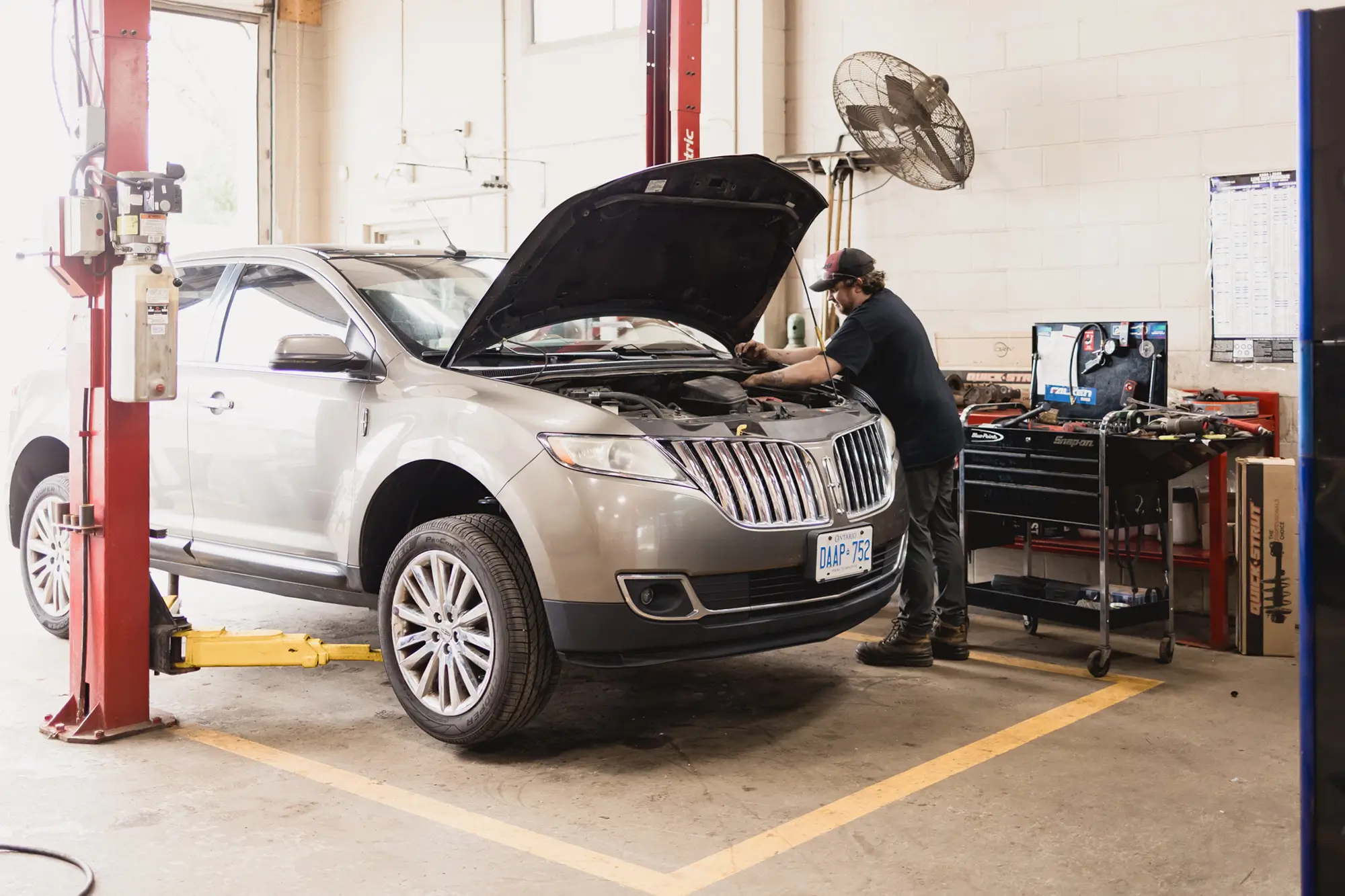
Motor Vehicle Inspection in Brantford When buying, selling or obtaining insurance for a used vehicle, a vehicle inspection is a valuable investment. In some cases, it’s even a must-have. There are different types of vehicle inspections including insurance, safety and emissions checks. Carrier Auto location offers these services and are compliant with the provincial regulations where they are. In a typical MVI, a mechanic will inspect a number of parts of a passenger vehicle to confirm they’re in working order. For a truck or bus, there are additional requirements such as inspecting the power train, air brakes, and electric systems. Insurance Inspections Most insurance companies require a safety inspection on vehicles that are 10 years old or older before the vehicle can be insured. contact us today for rates and more information. Provincial Regulated Car Inspection Most provinces require an out-of-province vehicle inspection before the vehicle can be registered. In most cases, vehicles require this inspection within three months of being brought into the province. Specific Provincial Regulations In Canada, provinces all have their own MVI regulations. To obtain more information on your area’s specific Motor Vehicle Inspection Regulations, refer to your provincial ministry of transportation. British ColumbiaIn B.C., an emissions test known as AirCare is required in some parts of the lower mainland, primarily around Vancouver. This test must be administered every two years in order to comply with legislation. OntarioOntario has a similar provincial emissions tests in some parts of the province, part of Ontario’s Clean Drive initiative. They are included in the MVI and must be conducted every two years. Nova ScotiaIn Nova Scotia, safety inspections are required every two years. In New Brunswick and Prince Edward Island, cars must undergo annual safety inspections. ManitobaIn Manitoba, both new and used cars are required to have a valid safety check prior to their registration. Dealerships must provide this for new vehicles, and sometimes sellers of used cars will provide a recent inspection as an incentive. Call Carrier Auto in Brantford to book your Motor Vehicle Inspection today!
Fuel System flush
Fuel System Flush Service & It’s Importance Over the past few decades, the fuel systems of cars have transformed quite a lot. Earlier, cars had carburetors as the main component responsible for feeding fuel to the car’s engine. But the efficiency of these carburetors was highly questionable. This led to the excessive usage of fuel than required. Due to this shortcoming, automobile manufacturers developed fuel injection systems that helped cars figure out the optimal amount of fuel to utilize for maximum efficiency, thus bringing down the amount of fuel used by a vehicle regularly. Though fuel injection systems are highly efficient, they have one downside. These systems require proper cleaning now and then. It is essential to keep the fuel system clean as it helps the system provide the right amount of fuel every time you press your car’s gas pedal. Why is fuel system cleaning service important? Some may say that you need to get a full fuel filter replacement service. They aren’t entirely wrong, however you don’t have to go for a fuel system cleaning every time you change other oils or align your car’s wheels. This service is recommended less frequently, but it doesn’t mean that fuel system cleaning should be left behind. If you neglect fuel injection system service for a longer duration, there will be deposit build-up in the fuel system, which can cause different issues. Due to deposits and a dirty fuel system, you might end up burning more fuel than the required amount. Also, in some cases, you might struggle with acceleration, or the car could stall. When it comes to the accurate interval between two consecutive fuel system cleaning services, it varies depending on the car’s system. But usually, the experts advise going for a proper cleaning between every 10,000KM-40,000KM. Signs that your car needs fuel system cleaning service Some tell-tale signs quickly show that you need to book an appointment with the experts at Carrier Auto for fuel system cleaning services. Some of them are as follows: Benefits of a fuel system cleaning service The fuel system cleaning service involves complete chemical cleaning of the fuel system and a full flush. This process has several benefits, including the following: Improved engine performance: The proper maintenance and regular cleaning of the fuel system ensures improved engine performance. The process helps inject the required fuel whenever desired without putting stress onto other parts. Improved fuel economy: A regular fuel system flush service helps augment the car’s fuel economy as the engine works smoothly, reducing fuel consumption. Better engine health: Like other fluid changes services, a fuel system flush service is also a preventive maintenance process that takes care of any mechanical damage or performance issues, thus improving the engine’s life. If you think your vehicle may be due for a fuel system flush service, contact Carrier Auto today to discuss the service and book your appointment.
Exhaust Service
Exhaust Shop Near Me: Visit Carrier Auto If you are looking for an Exhaust shop near you, look no further than Carrier Auto! Vehicles need air filtration systems as they produce exhaust gases while running. These gases contain dangerous substances which can be hazardous to the environment. Every vehicle has an exhaust system to route these harmful emissions away from the engine. As any other components to a vehicle, the exhaust system needs service on a regular basis. So, what is an exhaust system, and how does it work? The exhaust system of a car works just like a kitchen chimney that directs the byproducts from burning fuel away from passengers. It routes waste gases from the engine to the car’s rear, discharged into the atmosphere. It also helps in converting pollutants into less harmful byproducts and provides the right amount of backpressure into the vehicle’s engine and thus improves fuel-burning efficiency and increases your vehicle’s performance. What are the symptoms of a defective Exhaust system? There are some warning signs which could mean that there are issues with your exhaust system. These are – Sometimes, without a professional inspection, problems with your exhaust system may go unnoticed. So, for this reason, or others, it’s a good idea to have a mechanic inspect your vehicle. You can check your nearby exhaust shops at Carrier Auto, and our skilled and experienced car technicians will help you get back on the road ASAP. What are the benefits of Exhaust Services? How often are Exhaust system services done? It is recommended to visit a trusted exhaust service shop at the first sign of an exhaust leak. Depending on driving conditions and driving habits, the exhaust system of your car will last anywhere from two to three years. However, to avoid any damage, it is very important to check your exhaust system periodically. So, whether you have a failed exhaust system or feel that it’s time for maintenance of your exhaust, bring your vehicle to your local Carrier Auto location.
Differential Repair
Differential Service at Carrier Auto Like a change in engine oil, a differential fluid change is also important to keep your car in good working condition. It plays an important role in making your car drive quietly and comfortable. To know better if a differential service is necessary, you have to know what a differential is and what it is for? A differential is a part of the drivetrain, which evenly distributes the vehicle power the wheels of your vehicle. It consists of a gearbox that is located in between your vehicle’s wheel. It makes sure that your wheels move independently every time you drive through corners and turns and thus makes your vehicle in control. There are front and rear differentials in all vehicles. So, what is differential fluid, and what does it do to your vehicle? Over time, the differential fluid oxidizes and breaks down. It also loses its ability to lubricate your vehicle’s gears and bearings in the differential. Differential fluid is a thick, dense liquid that is made to keep your differential properly lubricated. It is responsible for smooth control of your vehicle’s outer wheels and helps maintain proper distance between the outer drive wheels and the inside ones. When does your vehicle need Differential services? Some early warnings are shown by your vehicle about worn differential fluid, which lets you know that your vehicle needs differential service. These are – What are the benefits of changing differential fluid? The timely changing of differential fluid makes your vehicle more responsive and gives you a better road grip. Apart from this, other benefits are – How often should Differential fluid be changed? This always depends on the manufacturer, so it is always best to consult your owner’s manual for the proper service interval. But in several cases, you need to change the differential fluid every 50,000KM to 100,000KM. So, keep your vehicle turning on a dime by keeping up with regular differential fluid maintenance with Carrier Auto. Our expert technicians will help you with all differential service according to your owner’s manual recommendations.
Car diagnostic
Car Diagnostics Services: Everything You Need to Know Just like annual checkups for your health are important, the same goes for your car. Regular annual diagnostic tests detect various vehicle problems that may cause performance issues and require expensive repairs. A diagnostic test for cars helps to determine if something is wrong or not with your vehicle. Getting a routine annual diagnostics test can help you effectively check up on the health and function of your vehicle. What is a Car Diagnostics test? A car diagnostics test is a test that involves identifying as well as assessing problems that negatively affect the vehicle’s operation. It helps to reveal the problems associated with the vehicle’s safety system, brake system, transmission system, or any other control system. What parts of the vehicle are tested in the Car Diagnostics test? Car diagnostic tests analyze various aspects of your car. Specifically, check for – How Car Diagnostic tests are performed, and what it will tell you? Nowadays, vehicles have been manufactured with an internal computer technology that monitors, records and operates many components within the vehicle. Suppose something is wrong with your vehicle and it isn’t operating properly. In that case, the technician can take advantage of computer technology and car code readers to aid them in identifying and resolving malfunctions. The onboard diagnostics works with ECU to read any codes stored and download information to know what area of your car needs attention. The code only indicates to the technician which area of the vehicle component has fallen out of the acceptable range for operation. It does not provide any details on what is responsible for the failure. What are the benefits of Car Diagnostic tests? Identifying your problems was time-consuming and expensive, especially when you brought your car to the mechanics to find any malfunction after a breakdown. Several benefits of Car Diagnostic test are – How do you know if your car needs Diagnostic tests? Here are some indicators your vehicle shows which let you know that it may be the time to perform a diagnostic test – How often should your car undergo diagnostic testing? Carrier Auto technicians recommend you take your car in for a diagnostic check at least once a year, which will uncover minor problems that can’t be seen or heard. Scan tools used to find error codes can help avoid costly auto repair bills. Catch declining car health early to extend the life of your vehicle. So, don’t wait, visit to us and get the best Diagnostic services for your car.
Coolant Flush
Coolant Flush: What You Need to Know The primary function of an engine’s cooling system is to remove the heat generated by the engine during the entire combustion process. In the lack of an efficient cooling system and the required coolant, the engine would overheat very quickly, thus affecting and damaging the critical components of the engine and vehicle as a whole. What is Engine Coolant? Also known as antifreeze, engine coolant is a fluid that transfers heat and removes excess heat from the car’s engine. Engine coolant is made from a 50/50 ratio combination of water and ethylene or propylene glycol. These coolants are available in different types. When selecting an engine coolant for your car, it is better to go with the one mentioned in the owner’s manual for your specific vehicle. What is the Role of Engine Coolant? Antifreeze or coolant is added to the car’s cooling system, which then circulates the fluid throughout the radiator and engine to avoid overheating. When a vehicle’s cooling system is functioning to its optimum, it reduces the heat production by the engine effectively.It keeps the engine’s health in perfect shape, thus ensuring the smooth running of the vehicle. In the absence of regular coolant system flushes, the coolant system fails to work efficiently, causing the engine to overheat and eventual damage such as blown head gaskets, warped heads, and in severe conditions, engine failure. Why Does My Car Need a Coolant System Flush? The coolant needs flushing after a certain period as it deteriorates and fails to work effectively against freezing and boiling. Since a car’s engine has many parts that rust continuously, the coolant fluid collects debris and rust particles during circulation and deposits them in another part. Over time, the coolant also starts accumulating these particles, which leads to issues in its optimal performance. Now many amateur car keepers avoid getting fresh coolant till the damage is done. That’s why one of the most common reasons behind car breakdowns is radiator problems. Therefore, it is essential to watch out for signs to decide whether your car needs a coolant flush or not. Here are some indications: Overheating Engine and High-Temperature Gauge The most common sign of a needed coolant flush is overheating of the engine. If the high-temperature gauge readings are above average, this is a definite sign that your car needs a coolant flush. We also advise regular checking of the coolant levels to ensure that your car isn’t running on low coolant. You can do this on your own by Knocking or Grinding Noise Many drivers complain of a gurgling noise from the engine. Mostly, the knocking, grinding, or gurgling sounds are due to the coolant flow in the heater. Thus, these noises are coming from hoses or coolant reservoir. But if you find enough coolant in the car, then you should check the thermostat. Sweet Smell from Hood Suppose the car emits a funny, sweet smell, something like a multipurpose cleaner or maple syrup. In that case, it is the sign of a coolant leak. Coolant Leak Beneath the Car After some years, you will find fluid leakage from the car, and each of them signifies an entirely different meaning. The coolant or antifreeze leak is usually green, but the color can vary from yellow and pink to orange. You can confirm the leak by checking the antifreeze tank, and if it’s empty, you have the problem of a coolant leak. What are the Benefits of a Regular Coolant Flush? During the process of a coolant flush, the old coolant is pushed out along with rust and debris. This simple process not only enhances the car’s life but also provides many other benefits like: Rust Removal Over time, scale deposits and rust build up in the engine and radiator. A coolant flush removes these deposits as the old coolant and water are pushed out. Once these dust particles and scale deposits are removed, chances of engine overheating and radiator damage reduce considerably. Inspection of Coolant System A coolant flush is way more than pushing out the old coolant. During the process, the mechanic also looks for any leaks that can damage the engine or radiator. Pump Lubrication When new coolant is added, the additives in the antifreeze lubricate the water pump. This aids in the longer and better running of the water pump. Riddance from Contaminants One of the most significant benefits of coolant flush is the removal of contaminants present in the existing coolant. These contaminants can be detrimental to the car’s health as their accumulation can lead to the loss of anti-corrosive properties of the coolant. Over time, it can lead to radiator corrosion and rust build-up. With that being said, now you know what a coolant flush service is all about, so you should prioritize it and make it part of your regularly scheduled vehicle maintenance. Check the owner’s manual, or you can get coolant flush after every 50,000-100,000 KM in normal driving conditions and after every 30,000-50,000 KM in severe driving conditions. Call your local Carrier Auto to book your next appointment.
Check Engine Light
Check Engine Light: why you can’t ignore it? Suppose you are driving in your vehicle, and suddenly a yellow light pops up in your dashboard, looking like the outline of a car’s engine. This indicator is telling you to check up your engine, as something may be wrong with your car. In this situation, it is best to call us for service. What does the check engine light mean? The check engine light, also known as the malfunction indicator lamp on the dashboard, is a warning or signal that the onboard diagnostics system has detected a malfunction in the vehicle’s emissions, ignition, fuel, or exhaust systems. Check engine lights come in orange, yellow, or amber, depending on the vehicle’s manufacturer. If the light begins flashing, it indicates a more serious problem, such as a misfire or other serious issue that requires repair and should be dealt with quickly. If the engine light is illuminated but isn’t flashing, before rushing to any mechanic, first tighten the gas cap yourself as a loose gas cap can trigger a check engine warning. Why is your check engine light on? The check engine light comes on for countless reasons. While there is a chance of a major fault, it is sometimes likely that the problem could be something minor. Here are some of the most common reasons why your check engine light might be on- What to do if your engine light is on? You won’t know what to do with an engine light warning until a professional diagnoses your car. We recommend visiting us and get your vehicle diagnosed and repaired by our technicians. You can also apply some tips by yourself if the check engine light comes on. These are- Bring your vehicle to your local Carrier Auto shop where our technicians can run your vehicle through a code reader and do a physical inspection to determine what may be the source of your check engine light turning on. For questions or to book an appointment, call now!
Cabin Air Filter
Cabin Air Filter Service: Everything you need to know Have you noticed a musty odor in your car lately? Or is your car’s heat and air conditioning not working as they usually do? This all may be happening because of a clogged air cabin filter. Clogged filters can impact the flow of air which your vehicle HVAC system depends on. Dirty filters adversely not only affect cabin air quality but also reduce the power output from the engine. So, what is a Cabin Air Filter, and how does it work? The cabin air filter is a small size pleated filter. It’s usually made of multi-fibre paper cotton that cleans the air that comes into the interior through the heating, ventilation and air-conditioning system. It catches dust, dirt, debris and other airborne material such as pollen that can make your ride unpleasant. When the windows of your vehicle are closed, air enters the cabin through the ventilation system. The ventilation system supplies air to the heater and air conditioner, but before it reaches the heating and AC system, it also has to pass through the cabin air filter. As the air passes its way to the cabin, particles like dust, smoke, pollen, and larger debris like leaves get trapped into it. Thus the air that ventilates the cabin is kept clean and fresh for you. Over time, the filter will collect too much dust, debris and/or particles, so the point it can no longer collect any. When this happens, whatever is missed is passed through the filter and ends up in the cabin space with vehicle passengers. It is important to regularly have your filter inspected and changed when needed to prevent this from happening. How do you know if cabin air filters need changing? As mentioned above, cabin air filters no longer serve their purpose if they fill up with harmful containments. Some warning signs will let you know that your cabin air filter may need replacement. These signs include: If you observe any of these signs, it’s likely time to change your cabin air filter as it plays an important role in keeping your commute comfortable. You can visit your nearby Carrier Auto, where our trusted mechanics helps you get your ride fresh and safe. What are the benefits of replacing a clogged Cabin air filter? Replacing a cabin air filter eliminates many problems and can give you several benefits. These include: How often should you change your Cabin air filter? Each vehicle manufacturer has its recommendation on when to change the cabin air filter that can be found in the owner’s manual. Generally, it is recommended to replace it between 20,000 km to 30,000 km. That being said, your driving habits and conditions can play a large role in when your air filter may need to be replaced. For example, if you live in a rural community and travel a lot of dirt or gravel roads, your air filter will get dirtier quicker. If you think your vehicle may need a cabin air filter replacement, stop by your local Carrier Auto for quick, affordable and trusted service.

Brake repair
Everything You Need to Know About Brake Service When it comes to the different systems of a vehicle, the braking system is one that can be considered as the most important one. Every driver strives for peace of mind in knowing that their brake system is in excellent condition, and their brakes can quickly bring the car to a stop effortlessly and safely. What is Brake Service? Brake service can be considered an umbrella term for all services, procedures, and inspections related to the braking of your vehicle. A mechanic will start the service by thoroughly performing a brake inspection while ensuring that all brake components are working in their best condition. He or she will also inspect rotors, brake pads, calipers, and clips to ensure that all these vital components are working the way they should. If any replacements or repairs are required, the mechanic will get in touch with you to check if you want the service performed. Your car needs regular brake service to ensure that all braking system components, including rotors, brake fluid, calipers, and brake pads, are in excellent condition. With frequent servicing of brakes, you can keep your vehicle’s brake system in the best state between replacements. A car’s brake system impacts the safety, handling, and overall performance, so it must be maintained and inspected over regular periods. Signs that Your Car Needs Brake Service It is recommended that you should go for brake service every year or after every 20,000 kilometres. However, if you experience any of the signs listed below, it may mean you need to book your next service appointment sooner rather than later. Spongy or Soft Brake Pedal: Whenever you press the brake pedal to stop the car, it should be firm. If you come across brake pedals that are spongy, soft or need to be pushed to the car’s floor, it is a clear indication of the presence of air or moisture within the brake system. This may also indicate an issue with the master cylinder. These issues can have a massive impact on how well the brakes are applied and thus should not be neglected. Squealing, Squeaking, or Grinding Noise: When you engage the car’s brakes, listen to them. If you hear any grinding, squealing, or squeaking noises, you may have a problem with rotors, brake pads, or calipers. Squealing or squeaking sounds indicate that the brake pads have worn down or the caliper is rubbing against the rotor. If you hear a grinding noise, the damage has already been done, and you may have to change rotors and calipers. Burning Smell when Brakes are Applied: A burning smell is the last thing you want to experience while driving. If you experience a burning smell while applying brakes, it signals that your brakes are becoming overheated. Once you get a burning smell, stop your car at once and check for the potential cause. Neglecting this issue can boil the brake fluid, eventually leading to brake failure. How Can Brake Service Help Your Car? There is not an iota of doubt that brakes are a vital part of your vehicle. Without efficiently working brakes, you can’t stop your vehicle in time, which can have serious repercussions. It can cause a simple fender bender or a significant accident, and both situations aren’t worth the risk of skipping car brake service. By ensuring that you take your car for regular brake maintenance service, you ensure that brakes are fully engaged when you press them. It is essential to understand that brake pads are designed in such a way that they will wear down gradually. And if you wait longer than their shelf life, you have to shell out a lot of extra money. Why? The answer is simple; when pads wear down, and you keep driving the car without replacing them, it puts additional stress on the brake system’s other components like drums, rotors, and calipers. Should any one of these get damaged, you can easily add hundreds of dollars to your bill. With that being said, it is crucial to get your brakes checked now and then and get the required maintenance done if there are any signs of wear and tear. Book your brake service with Carrier Auto today!

Car Battery Replacement
At Carrier Auto, we can help you find the best battery to meet your needs. All batteries are not created equal and price will usually determine everything from the battery’s capacity to the length of its warranty. It will only take your Carrier Auto service technician a few minutes to check your battery and charging system – time you’ll wish you’d spent if you find yourself unable to start your vehicle! When selecting a new battery, choose one that: Today’s modern vehicles are a lot harder on batteries than older ones, thanks to their numerous internal systems. If you use a lot of your vehicle’s internal features on a regular basis, it’s a good idea to schedule regular maintenance to keep it in working order. If you find yourself with a dead battery, be sure to contact Carrier Auto. Many Carrier Auto dealers offer 24 hour emergency service and would be happy to assist you. Did you know? Warm temperatures are harder on batteries than cold weather. This extra heat can come from stop-and-go traffic on hot pavement, the draw of your air conditioner or an engine that faces a lot of stress. You’re simply more likely to notice the problem on cold days when you may need twice as much voltage to start the engine! Get help with your battery. Schedule an appointment with us today.

