

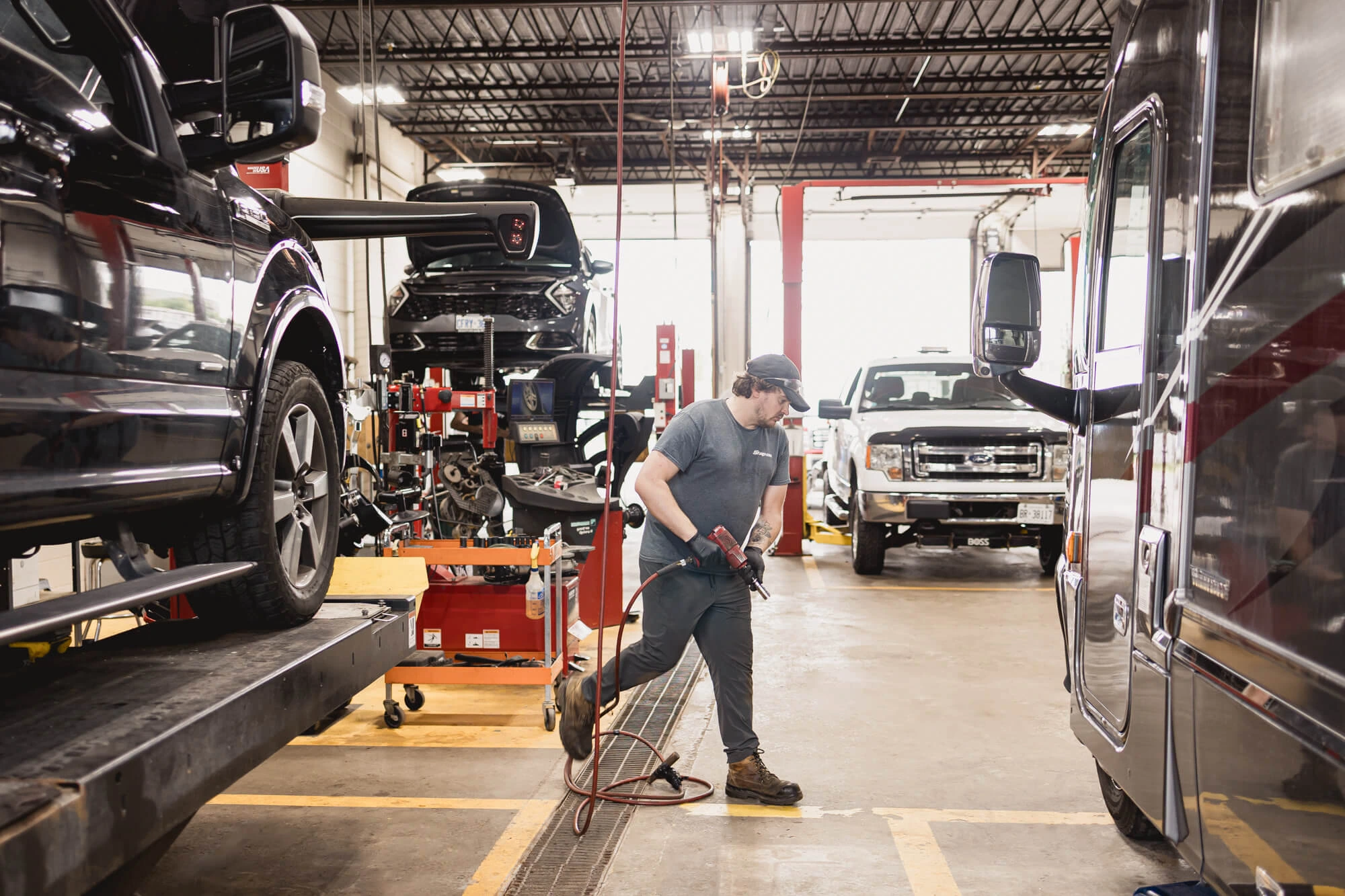
The Importance of Regular Auto Repair Services Maintenance of your vehicle is the most important thing that you can do to keep it operating properly for years to come. But surely the expenses of auto repair services are not in your monthly budget. However, it’s really important to keep up with regular vehicle maintenance in order to prevent costly auto repairs later down the road. Your mechanic can detect if some small issue could turn into a major repair by taking your car into your auto repair shop for regular service. Our professional mechanics are pleased to offer you a wide range of auto repair and services to ensure that your vehicle is in top working order. Whether it’s scheduled maintenance or auto repair from damage, our technicians and mechanics are certified to perform factory-required maintenance to keep your warranty valid. Some benefits of keeping up with regular auto repair services are – Some of our Auto Repair and Maintenance services include – To schedule auto repair and maintenance for your vehicle – Contact Us
Wheel Alignments
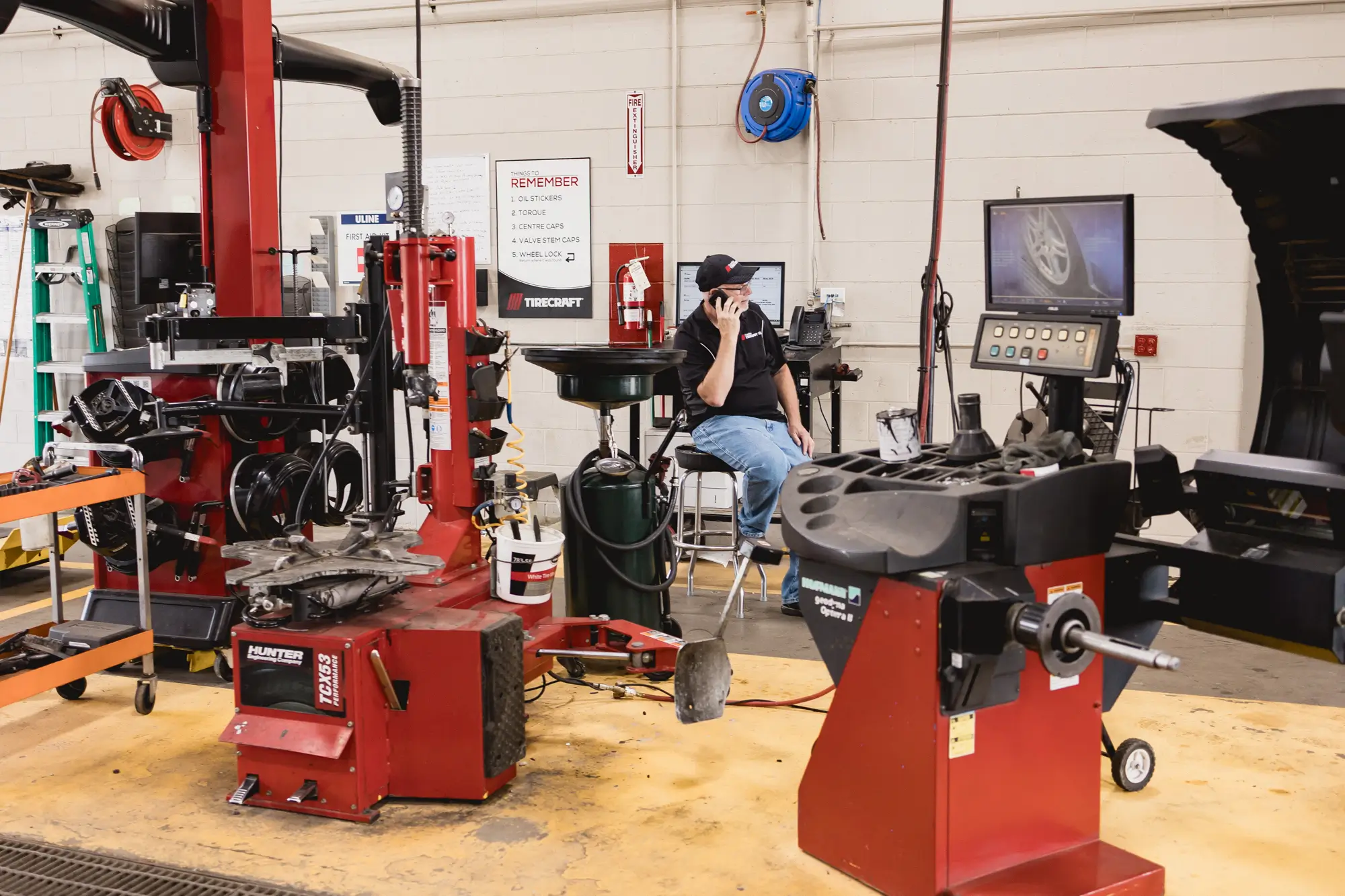
Wheel Alignment Service: Why Do I Need One? Are you constantly adjusting your vehicle or practically fighting the steering wheel by putting extra force so you can drive your car straight? Or perhaps your car tires are worn out unevenly quicker than anticipated? If these sound familiar, then it might be time to get your wheels aligned. Ensuring your wheels are accurately aligned not only improves the performance but also longevity of your vehicle. When you look at your tires, you may notice that they are wearing more on one side than on the other. So, your car needs a proper wheel alignment for a balanced ride, improved mileage and longer tire tread life. Therefore, it is essential to maintain accurate alignment in your vehicle to ensure the best quality and performance. But first, what is a Wheel Alignment? A wheel alignment refers to comparing the angle of your wheels to each other and your vehicle’s body. The purpose of an alignment is to ensure that the wheels direction is within the manufacturer specifications. If they aren’t aligned, it can cause multiple problems with your vehicle were repairs costs can add up quick. The alignment of the wheel is adjusted by altering the vehicle’s suspension. So, technically, an alignment of wheels means adjusting the suspension components and not adjusting the wheels/tires themselves. How do you know your vehicle needs a Wheel Alignment? When the angle of your wheels become skewed, there come various changes to your driving experience. There are some warning signs mentioned below so you know the signs that you might need to get your wheel alignment checked – If you are experiencing any of these symptoms, chances are something isn’t right in your vehicle. So, be sure to book into Carrier Auto today, as it may mean that there’s an issue with your suspension or your wheels and tires. What does Wheel Alignment do? The alignment of the wheel gives many benefits to your vehicle. These include- How often should the Wheel Alignment be done? To ensure the optimal safety of your car, it is best to opt for a wheel alignment 1 – 2 times per year. Typically drivers get their alignment checked twice per year while getting seasonal tire change overs complete. If you don’t have seasonal tires, ask your mechanic for an alignment check during your next oil change or mechanical service visit. It is also important to visit a reputable car service center for wheel alignment service of your car. You can visit your local Carrier Auto, and our skilled and experienced car technicians will help you align your wheels as necessary. Call to book your next appointment today!
Transmission Flush
Transmission Flush Service Whether it’s a simple oil filter change or complete transmission fluid flush or exchange, you have to do it regularly to maintain your vehicle before big problems rear their ugly head. A transmission flush is a fluid replacement process in which old fluid from your vehicle is removed and is refilled with fresh fluid. This then helps in cooling and lubricating the vehicle’s automatic transmission. Your car may be calling out for a transmission flush when giving warning signs such as – The transmission flush just like an oil change should be performed from time to time to maintain the transmission system, which you cannot drive without. It is designed to safely and smoothly transfer power from your vehicle’s engine to your vehicle’s wheels. Proper flushing of old, dirty fluid can be done by one of our licensed mechanics. Our equipment connects to the car’s transmission and pumps dirt and debris from the vehicle so new fluid can be replaced. This service will eliminate the contaminants and give your vehicle a new life. Apart from this, there are other benefits of a transmission flush, which are as follows- If you haven’t had a transmission service done during the lifetime of your vehicle, it is recommended to have a full transmission fluid flush performed by our technicians. During a transmission flush, your transmission pan is drained, inspected, and cleaned, and the transmission filter is replaced, and new fluid is refilled, replacing old fluid with new. The transmission fluid should always be at a particular level that lubricates the parts as it can only be topped off and wash away varnish from the clutch pack, causing the clutch slippage. Usually, a transmission flush is recommended at every 50,000- 80,000 kms and every 3 to 5 years. But it’s always better to reference your owner’s manual for manufacturer recommendations on maintenance schedules for your specific vehicle. So, if your car has any of the symptoms listed above and you want to find a mechanic that can take care of your vehicle and perform a transmission flush while being honest and trustworthy with clients, contact your local Carrier Auto shop to learn more or book an appointment.
Tire Rotations
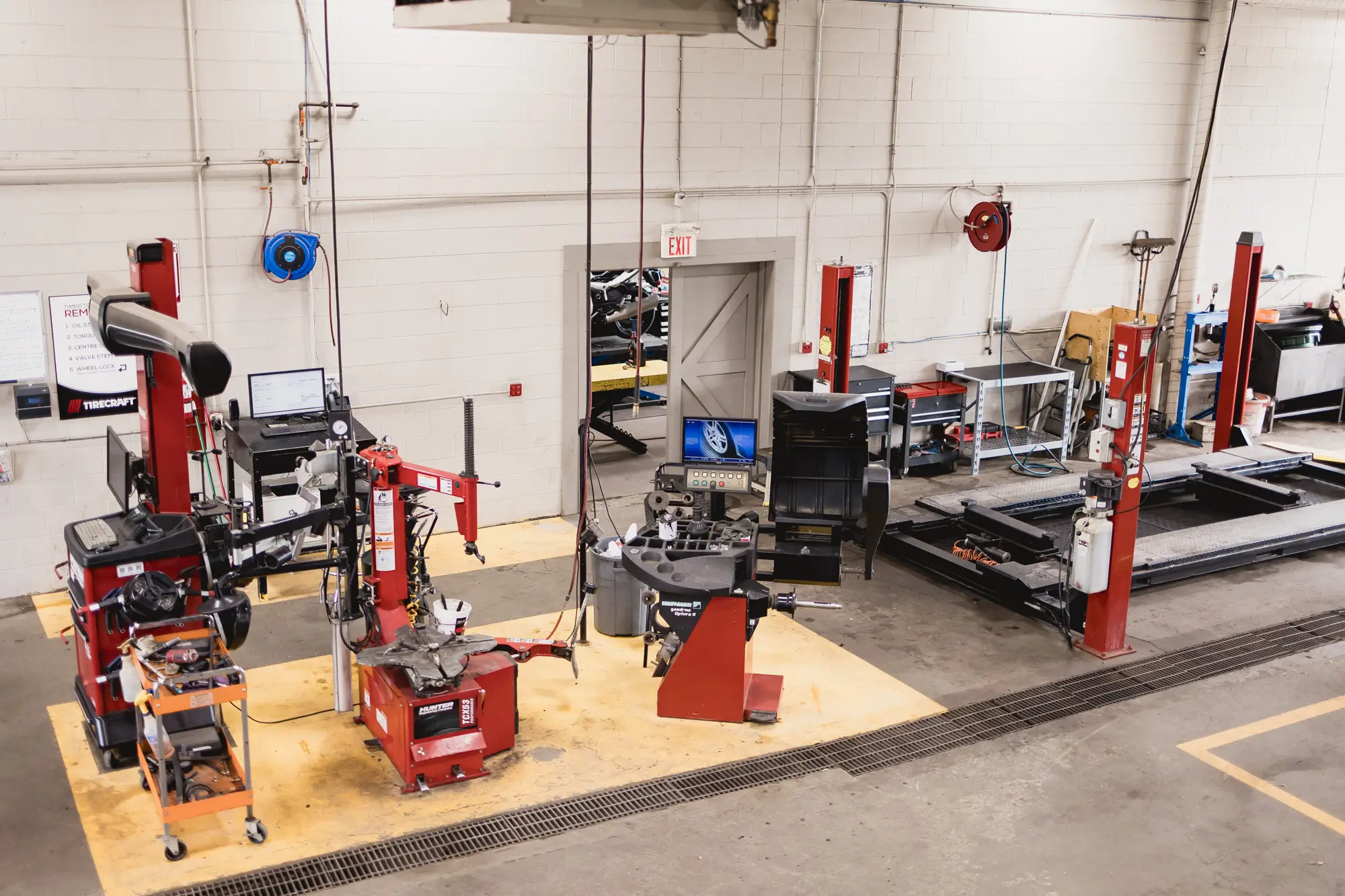
Why rotate your tires? To get the most life out of your tires, our experts at Carrier Auto Brantford recommend rotating your tires on a regular basis. Front and rear axle tires wear differently; for example, the front axle carry more than 60% of your car’s weight. As a result, front tires wear down faster than the rear axle ones. Tire rotations equalize these natural tread wear patterns by changing the positions of your tires – sometimes side to side, or in a cross pattern, depending on the vehicle manufacturer guidelines. It isn’t quite as simple as just moving tires from the front to the back, especially for full size vehicles or those using a spare tire in the rotation. Quick Facts about Tire Rotations By rotating your axle tires regularly and following the correct cross pattern, you’ll ensure yourself a smoother and safer ride. You can also save money in the long run by extending the life of your tires and preventing uneven tread wear. How often should you rotate your tires? Check your car’s owner’s manual for the recommended tire rotation schedule. Most manufacturers recommend that you rotate your tires every 10,000km. For vehicles that are used for heavy-duty or off road driving and have aggressive tread tires, it can be a good idea to rotate these tires at 5,000km to avoid uneven wear. Visit our service center at Carrier Auto Brantford for professional tire and wheel maintenance today.

Suspension
Suspension in Brantford Your vehicle’s suspension is key because it essentially connects it to its wheels. Without a suspension that is in good working order, you will not have stability and you’ll have to endure a bumpy and uncomfortable ride. It is important to have your suspension routinely inspected, which Carrier Auto Brantford can do quickly and meticulously. Our services include: Alignment It is imperative that all the complicated, moving parts in your suspension are properly aligned to ensure efficient motion and safety. Carrier Auto Brantford will give your suspension the alignment it needs to provide stability and to function properly. If you feel your vehicle pulling to one side or hear clunking and grinding noises, an alignment is probably in order. Ball Joints Ball joints are used in just about every automobile, and you need trained and meticulous technicians to assess the ball joints in your suspension to make sure that they are in tip-top shape. Ball joints are also used in tie rod ends. Shocks Shock absorbers are are an integral part of your suspension that need to be regularly inspected to ensure they are giving you and your passengers stability and a smooth and safe ride. Worn shocks can impact other important parts of your vehicle and can have safety implications, including: Struts Struts might be passive braces reinforcing the chassis or active components of your suspension. A suspension strut combines the primary function of a shock absorber and the ability to add support to the chassis.Your struts may require service if you find your vehicle shaking or bouncing after hitting a bump in the road. Control Arms Control arms are hinged suspension links between the chassis and the suspension. Steering Steering is—as most people would recognize—kind of important in your vehicle. Without it, your vehicle is useless and dangerous. You should always have your steering inspected if you feel your vehicle pulling. Bushings Bushings in your suspension are most commonly made of (synthetic) rubber and separate metal objects while still permitting a degree of movement. This allows the suspension parts to move freely when going over bumps, while also reducing grinding noise and small vibrations. Camber The camber angle is the angle made by the wheels of your vehicle. It’s the angle between the vertical axis of the wheels and the vertical axis of the automobile as seen from the front or the back. Wheel bearings Wheel bearings are sets of steel balls bound by a metal ring called a race. They allow the wheel to spin with very little friction. Wheel bearings add stability to your ride. If you hear a clunking or grinding noise, you should bring your vehicle in to Carrier Auto Brantford for an inspection, as clunking and grinding noises often arise from misaligned or imperfect wheel bearings. At Carrier Auto Brantford we offer a variety of products and services to enhance your vehicle’s suspension.Our ASE-certified technicians will do everything to keep your vehicle in great shape. Book your steering and suspension check with us today!
Shocks & Struts Service
Shocks and Strut Service for Your Vehicle Does every car ride of yours feel like a rough ride, no matter how smooth the road is? Does your car feel like a bucking bronco? If this happens, it may be time to look at your car’s suspension system and consider replacing your shocks and struts. What are shocks and struts, and what do they do? Shocks and struts play a large role in your comfort and handling of a vehicle. Some vehicles come equipped with shocks, struts or both. Shocks or a shock absorber focus on absorbing unevenness or bumps in the road and allow your vehicle to steadily travel along. Struts also serve a similar role but are designed differently. Both are mounted to your vehicle’s suspension system and work with the other components in your suspension system to ensure a stable and comfortable ride. Shocks and struts help your tires maintain traction by minimizing bouncing and other movements that inhibit safe handling. They also help in keeping the weight of your car balanced and stable over speed bumps. How do you know your vehicle needs shocks and struts service? Shocks and struts deteriorate slowly over time. Because of this, your vehicle’s suspension can go from bad to worse slowly over time. Several signs tell you that you need to replace the shocks and struts. These can include – Why replace them? Worn out shocks and struts decrease the lifespan of your tires, as well as limit the steering and performance of your vehicle. Having these components serviced and/or replaced will significantly increase the performance of your vehicle. Some of these benefits include- How often should Shocks and struts be replaced? Typically it is recommended to have your shocks and struts services or replaced every 80,00KM to 160,000 KM depending on your driving habits. For best results and care of your vehicle, check your owner’s manual to find specific maintenance intervals for your make and model of vehicle. If you still have questions or are wondering how often you need to replace your shocks and struts, visit your local Carrier Auto today! Our qualified technicians will provide you with more information about car struts and shocks and help you have a safer, comfortable and enjoyable ride.
Serpentine Belt
Quick Guide to Serpentine Belt Service Does your vehicle make squeaking noises? This could be due to the serpentine belt in your engine! If you are hearing a squealing noise, your engine is overheating or your air conditioner isn’t working, it may be time for a serpentine belt service appointment. But first, what is a Serpentine Belt, and what does it do? A serpentine belt is a long snake-like rubber belt used to drive multiple peripheral devices in your automotive engine and keeps them running smoothly and effectively. It rotates continuously when the car is running. It plays an essential role in your car’s system as it transfers rotational energy from your engine’s crankshaft to all the engine accessories like power steering, air conditioning compressor, power steering, etc. Each of these accessories has a pulley. This belt acts as a connection between these pulleys to rotate the engine crankshaft. So, when the crankshaft rotates, those pulleys also rotate and thus power the accessories. What are the signs of a worn out Serpentine belt? Your vehicle will give off some early warning signs that your Serpentine belt may be worn out and need service or replacement. Some of those warning signs include: If any of these warnings are shown in your vehicle, then it is recommended to get it checked by a professional mechanic and get a new serpentine belt. You can visit your nearby Carrier Auto, and our experts can visually inspect the belt, identify belt slippage or belt breaks that may require service or replacement. What are the benefits of having the Serpentine belt replaced? Here are a couple of benefits of replacing a broken or worn Serpentine belt: How often should you replace the Serpentine belt? As part of regular preventative maintenance the belt should be inspected yearly. Typically belts will need to be replaced every 100,000km However, because of advancement in rubber technology, serpentine belts can last longer depending on driving habits and conditions. If you are unsure if your vehicle requires service or replacement of your serpentine belt, you can check your owner’s manual for recommended service intervals, or stop by at Carrier Auto for us to conduct a visual inspection and service recommendations.
Preventative Maintenance
Preventive Maintenance for your Vehicle You can’t deny that the automobile is one of the most expensive purchases you have during your lifetime. So, to protect your investment by making sure that your vehicle has the longest lifespan possible, it’s important to get your car inspected from time to time. In addition, to ensure your car’s dependability, some preventative maintenance needs to be addressed and inspected to keep your vehicle’s warranty intact. What is Preventive Maintenance? Preventive Maintenance refers to the protection of your vehicle against any kind of potential auto repairs. Basics of preventative Maintenance checklist include checking your tire pressure, changing the oil, tire rotations, topping off fluids, changing the brakes, coolant replacement, etc. These services done for your car is just like getting regular checkups at the doctor as it prolongs your car lifespan, boosts efficiency, and leverages asset management. How do you know if your car needs Preventive Maintenance? Every vehicle needs preventative maintenance on a regular basis. Having scheduled maintenance on your vehicle will catch early warning signs of malfunctions that could cause costly breakdowns later on. Some warning signs include: Why is Preventive Car maintenance important? A preventative maintenance schedule prevents minor to severe problems with your vehicle. Some benefits of why proper preventive vehicle maintenance is important and doing it regularly is essential for you are – Preventive Maintenance Checklist – Be sure you go through this Preventive maintenance checklist or a similar checklist every few months. It is always recommended to check your owner’s manual to determine specific factory scheduled maintenance for your vehicle. The list includes: There is a long list of items that are considered to be preventative maintenance measures. They may not seem like big things, but if put off for long lengths of time, they can result in some hefty vehicle repair bills. Reach out to our experts at Carrier Auto or check your vehicle owner’s manual for a preventative maintenance program.
Power Steering Flush
Power Steering Flush & It’s Importance It doesn’t matter how expensive your vehicle is or how gentle you are with your car, most of the drivers are bound to face one issue or another with the power steering system of the vehicle. It can be anything, from hard turning when the car is cold, stiff steering, unusual noises, and fluid leaks. The driving factors behind these issues are friction, heat, and electrochemical degradation, typical by-products of a regular driving routine. Power steering fluid is clear and clean when it is new, but gets dark over time. Sludge deposits and varnish can accumulate in the power steering system, impacting the responsive handling and ease of turning. What is Power Steering Fluid? Power steering fluid is a critical component that keeps trucks and cars running effortlessly. Just like the name suggests, it helps you turn and steer your car without any effort. It is a hydraulic fluid utilized in the steering system, which develops a hydraulic link between the vehicle’s front wheels and the steering wheel. This hydraulic link helps decrease the efforts required to turn the wheels on bends. Usually, the power steering fluid comes in amber, red, pink, or light/clear colours. If you find the power steering fluid foamy or dark brown, it is a clear indication of changing the fluid. The power steering fluid also helps in lubricating other moving parts of the steering system. It also prevents corrosion and reduces foaming in the steering pump and power steering gear, which eventually keeps your car running without any glitches. What is the Role of Power Steering Fluid? For any car’s power steering pump operation, power steering fluid is essential. This fluid is stored in the power steering pump reservoir and is responsible for a wide range of functions which are as follows: Lubrication of power steering pump: One of the critical roles of power steering fluid is the lubrication of the power steering pump unit. This is the reservoir for the car’s power steering fluid. This unit also aids in pressuring the power steering fluid, which helps in its circulation through the entire power steering system. Lubrication of power steering gear unit: Apart from lubricating a car’s power steering pump unit, the power steering fluid also lubricates the power steering gear unit. This unit is a critical part of the power steering system and is associated with the vehicle steering rod mechanism, which eventually moves the front tires of the car. Provides the necessary hydraulic pressure: Once pressurized and circulated by the power steering pump, the power steering fluid moves through the entire power steering system of the car while providing the much-required hydraulic pressure needed by mechanical parts of the power steering system to function. Reduces the friction in the power steering system: Apart from all the aforementioned functions, power steering fluid also lubricates and oils the different mechanical parts of the power steering system. Like other mechanical systems with various connected components, a power steering system also has different components, big and small that work in sync with each other and cause friction. The power steering fluid helps in reducing this friction, resulting in the lesser wearing of the power steering system. Reduces the temperature of the power steering system: While lubricating the power steering system, the power steering fluid also reduces the average operating temperature of the power steering pump and power steering gear unit, the most essential and heat-generating components of any power steering system. Why Does A Car Need A Power Steering Fluid Flush? The answer is contamination. Like the oil, the power steering fluid doesn’t burn off but can get contaminated with sludge and dust particles. With time, the fluid contamination level increases, thus putting the entire system and power steering fluid pump under stress. If you wait until you start hearing noises or struggle to steer the wheel, you are already in for a huge bill. Ideally, experts at Carrier Auto suggest a power steering fluid flush every 80,000KM to 100,000KM, though it can vary for different cars. Or you can look out for certain signs signalling that you need a power steering fluid flush. Consult your owner’s manual: Pick up the owner’s manual as it is full of adequate information about your car, the suitable intervals for fluids change, and other essential tips to take care of your car. Usually, the manual also has recommendations on the fluid formulation that should be used for the best performance. Keep an eye on the fluid: Run your car for a couple of miles, then go under the hood, get the dipstick and check the colour of the fluid. Ideally, the colour should be bright red, but if it appears dark, then you may need to book an appointment soon. Also, check the power steering fluid reservoir for particles and sludge. If you see sludge deposits and contaminants, it is time for power steering fluid flush. Listen to the pump: The power steering fluid pump can tell you a lot about the fluid; all you need to do is listen. The more the fluid is contaminated, the harder will be the job for the pump and noisier it will get. If you frequently hear a whining or other loud noises from the power steering system, try flushing the system and adding fresh fluid. Steering issues: Trust us; you don’t want to reach the point where you face steering issues. And if it’s happening, then it is a definite sign that there is some issue with the power steering fluid. What are the Benefits of Regular Power Steering Fluid Flush? There are a few significant benefits of getting a regular power steering fluid flush. Some of them are as follows: Smoother steering: After a power steering fluid flush, you can turn and steer your car without any effort. The grime in the fluid can make steering a struggle. The vehicle becomes more responsive to turns with new fluid, making the driving experience efficient and
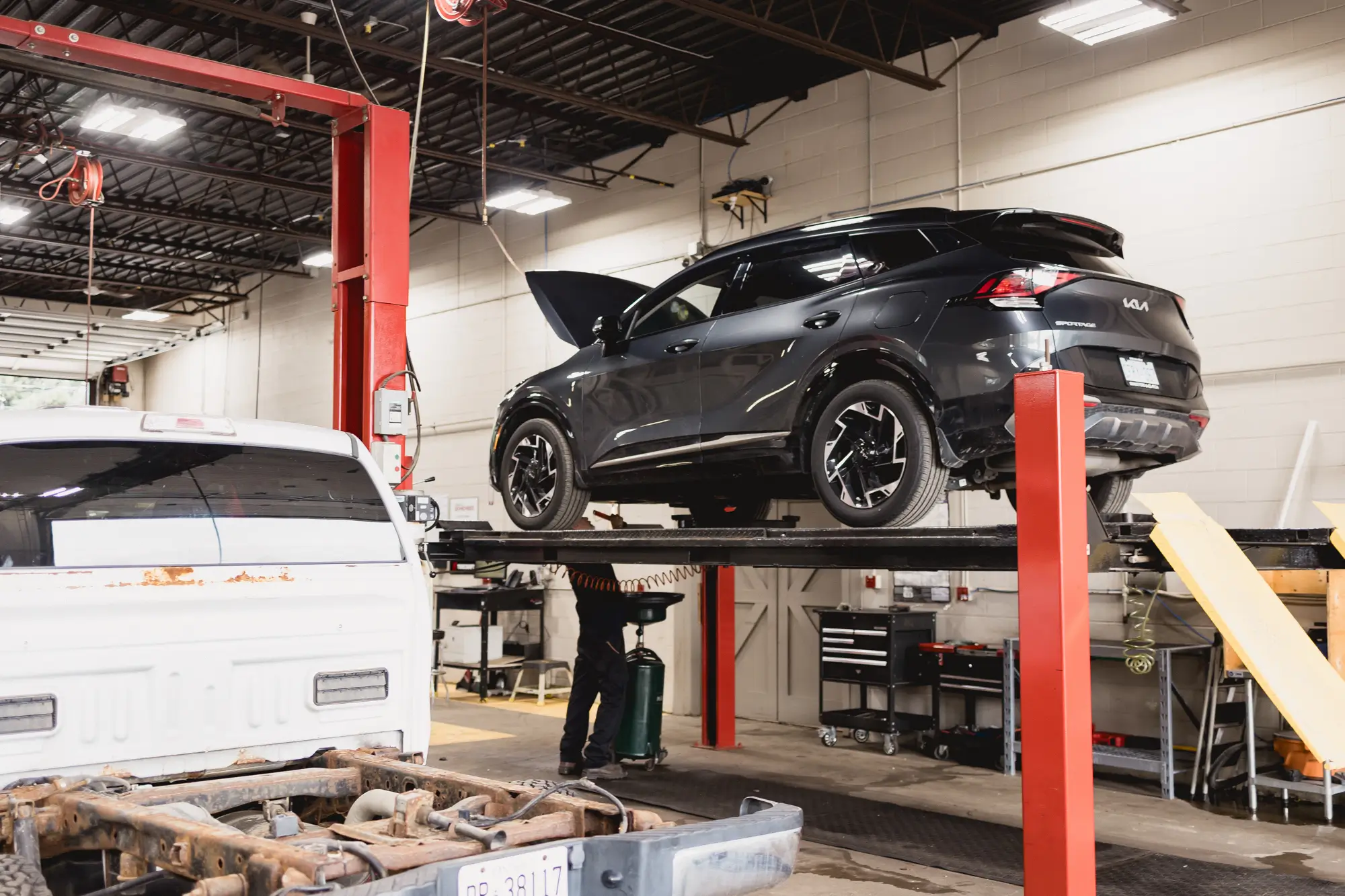
Oil Change
Engine oil and filter change near me Preventive maintenance is crucial to keep your vehicle operational, whether big or small. Changing your engine oil and oil filter is the most basic maintenance and is an essential service for your vehicle to ensure that your engine stays dependable. Neglecting this service can lead to stressful and expensive repairs. The intervals in which you should change your engine oil depends on your vehicle’s model and driving habits; however, the easiest way to know when to change your oil is to follow your manufacturer’s recommendations. What are Engine oil and filter change services? Engine oil and filter change services are conducted by completely draining your engine of oil and refiling and fitting a brand-new oil filter in your vehicle. Engine oil lubricates the parts of your vehicle’s engine and helps them to work efficiently during combustion. Without changing your engine oil in a timely manner, the metal components in your engine would begin to rub together, causing irreversible damage to the engine. The oil filter can become blocked by all this debris, and this blockage reduces the amount of oil that can pass through, causing severe damage to your engine. If left for too long, your vehicle can sustain major engine damage leading a car that is no longer drivable. During an oil and filter change service, firstly the drain plug has been removed, and oil is drained. After the oil filter is removed, both the drain plug and the oil filter are replaced. Lastly, the correct oil is refilled to the correct levels. Benefits of Engine oil and filter change services Thus, adequately scheduled engine oil and filter changes are crucial in keeping your car running correctly. The frequency with which you should change your engine’s oil will vary depending on a number of factors such as how much you drive, in what kind of conditions you drive, and what type of vehicle you own. Many recommend that the oil filter be replaced every second time you get your oil changed. However, many other factors come into play that suggests engine oil and filter replacement. It is always best to follow your manufacturer’s recommended maintenance schedule. At Carrier Auto, your oil change is a quick and straightforward service. Our certified, thoroughly trained technicians are here to give your vehicle a longer life and the best services that you can trust. We will do everything to keep your car in great shape.

