

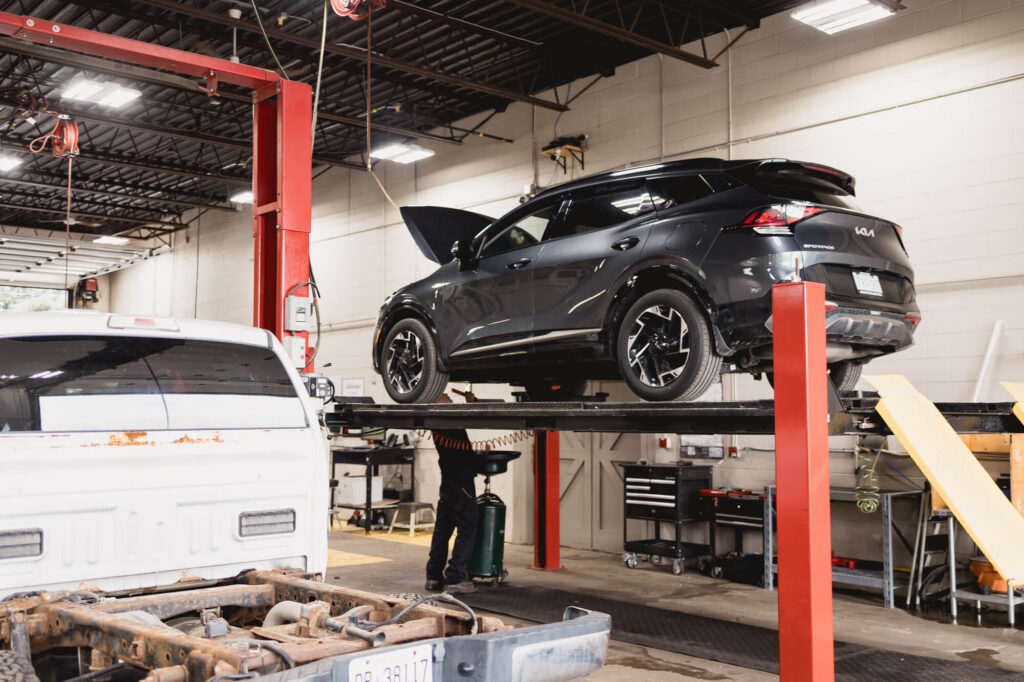
How Often Should You Change Your Oil?
Regular oil changes are one of the most important parts of maintaining a gasoline or diesel engine. Fresh engine oil lubricates moving components, reduces friction, helps manage heat, carries contaminants toward the oil filter, and protects internal engine surfaces from premature wear.
As motor oil ages, exposure to heat, moisture, combustion by-products, dirt, and normal engine operation gradually reduces its ability to provide effective protection. Changing the oil and filter at the appropriate interval helps keep the engine clean, efficient, and reliable.
The quick answer: A general oil change reminder for many drivers is approximately every 5,000 to 8,000 kilometres, but this is not a universal rule for every vehicle. The correct interval is the mileage or time specified in your owner’s manual or calculated by your vehicle’s oil-life monitoring system. Some newer vehicles using manufacturer-approved synthetic oil may allow longer intervals, while demanding driving conditions may require earlier service.
How Many Kilometres Should You Go Between Oil Changes?
There is no single oil change interval that works for every vehicle. The right schedule depends on the vehicle’s year, make, model, engine design, required motor oil, driving conditions, and maintenance history.
Start with these three sources:
- Your vehicle owner’s manual. It provides the manufacturer’s recommended maintenance schedule and specifies the correct oil viscosity and performance standard.
- Your oil-life monitoring system. Many newer vehicles calculate oil life based on operating conditions rather than mileage alone.
- The severe-service schedule. Your manual may contain a shorter maintenance interval for vehicles exposed to frequent short trips, idling, towing, heavy traffic, or extreme temperatures.
Ontario’s Ministry of Transportation notes that manufacturer maintenance schedules may be based on accumulated mileage or time intervals. That means a vehicle may require service even when it has not travelled many kilometres.
| Driving situation | Recommended approach |
|---|---|
| Normal mixed driving | Follow the regular schedule in the owner’s manual |
| Vehicle with an oil-life monitor | Schedule service when the maintenance reminder appears |
| Frequent short trips or stop-and-go driving | Check the severe-service schedule |
| Regular towing, hauling, or extended idling | Follow the manufacturer’s severe-service recommendations |
| Unknown maintenance history | Have the oil inspected and establish a new service baseline |
| Very low annual mileage | Follow the time-based interval in the owner’s manual |
Avoid relying only on the old “every 5,000 kilometres” or “every three months” rule. Modern engine designs and oil formulations vary considerably, so a vehicle-specific recommendation is more accurate than a universal number.
Why Are Regular Oil Changes Important?
Inside your engine, numerous metal components move at high speeds and under significant pressure. Motor oil creates a protective film between those components, reducing direct metal-to-metal contact.
Over time, oil can become contaminated and its viscosity can change. Its additives also become less effective. When old oil can no longer provide adequate lubrication, friction and internal engine wear may increase.
Regular oil and filter changes help:
- Protect bearings, pistons, camshafts, and other internal components
- Reduce friction between moving engine parts
- Control deposits and sludge
- Carry heat away from high-temperature areas
- Maintain consistent lubrication during cold starts
- Support reliable engine operation
- Reduce the risk of expensive, preventable engine damage
An oil change is relatively simple maintenance, but delaying it repeatedly may contribute to accelerated wear and, in severe cases, major engine problems.
What Can Shorten Your Oil Change Interval?
Your driving habits can be just as important as the number shown on the odometer. Some operating conditions place additional stress on the engine and motor oil.
Frequent Short Trips
During a short trip, the engine may not remain at full operating temperature long enough to evaporate accumulated moisture and fuel vapours. Repeated cold starts and short drives can therefore be harder on the oil than a longer highway journey.
Stop-and-Go Traffic
Driving in congested traffic may involve extended engine operation while the vehicle travels relatively few kilometres. As a result, mileage alone may not accurately represent the amount of engine use.
Extended Idling
An idling engine continues to generate heat and contaminate its oil even though the odometer is barely moving. Vehicles that spend substantial time idling may need more frequent maintenance.
Towing or Carrying Heavy Loads
Towing a trailer or regularly carrying heavy cargo increases the engine’s workload and operating temperature. Check the towing or severe-service section of your owner’s manual for the appropriate schedule.
Extreme Temperatures
Very cold starts and high operating temperatures can put additional demands on both the engine and its oil. Using the correct manufacturer-approved viscosity is especially important during changing Canadian seasons.
Dusty or Dirty Conditions
Dust and airborne contaminants can place additional demands on engine filters and fluids. Vehicles driven regularly on construction sites, gravel roads, or in similarly dusty environments may need closer inspection.
Modern oil-life monitoring systems may account for conditions such as engine temperature, time, idling, towing, and driving habits when estimating the remaining oil life.
Does Synthetic Oil Last Longer?
Synthetic motor oil is formulated to remain stable across a wider range of operating temperatures and generally resists breakdown better than conventional oil. For this reason, some vehicles using full synthetic oil have longer manufacturer-approved service intervals.
However, simply switching to synthetic oil does not automatically mean that every vehicle can safely follow an extended interval. The engine must still receive oil with the correct:
- Viscosity grade
- Manufacturer specification
- Industry performance standard
- Additive formulation
Some turbocharged, high-performance, diesel, and newer engines have very specific oil requirements. Using an incorrect oil may affect performance and protection even when the product is labelled “full synthetic.”
The safest approach is to use the oil specification listed in the owner’s manual and follow the vehicle’s approved maintenance schedule.
Signs Your Car May Need an Oil Change
The maintenance schedule should be your primary guide, but your vehicle may also provide warning signs that require attention.
The Oil Change Reminder Appears
Many vehicles display messages such as “Change Engine Oil Soon,” “Maintenance Required,” or “Oil Change Required.” These reminders normally indicate that scheduled maintenance is approaching or due.
Do not reset the oil-life monitor unless the oil and filter have actually been changed.
The Engine Sounds Louder Than Usual
Ticking, tapping, knocking, or unusually rough engine operation may indicate inadequate lubrication, a low oil level, incorrect oil, or another mechanical problem. An oil change may be needed, but unusual engine noises should be inspected rather than diagnosed solely from the sound.
The Oil Level Is Low
A low reading on the dipstick does not always mean the oil is overdue for replacement. The engine may be consuming oil or there may be a leak. Top up only with the correct oil and arrange an inspection if the level continues to fall.
You Notice an Oil Leak or Burning Smell
Oil spots under the vehicle, smoke from the engine compartment, or a burning-oil smell may indicate a leaking gasket, seal, filter, or drain plug. Adding more oil does not repair the source of the leak.
The Oil Looks Gritty or Contaminated
Engine oil normally becomes darker as it circulates, so colour alone is not a reliable way to determine whether it needs to be changed. However, oil that appears unusually thick, gritty, milky, or contaminated should be inspected. Milky oil, for example, may indicate moisture or coolant contamination and requires professional diagnosis.
Blue Exhaust Smoke Appears
Blue or blue-grey exhaust smoke may indicate that the engine is burning oil. This is not simply a sign that an oil change is due. The vehicle should be inspected to identify the reason for the oil consumption.
Oil Change Reminder vs. Oil Pressure Warning
These dashboard warnings do not mean the same thing.
An oil change or maintenance reminder normally means that routine service is approaching or overdue. You should arrange an appointment soon.
A red low-oil-pressure warning light can indicate that the engine is not receiving sufficient oil pressure. This is a potentially serious condition.
When the red oil-pressure warning appears:
- Pull over safely as soon as possible.
- Turn off the engine.
- Check the oil level according to the owner’s manual.
- Do not continue driving if the warning remains on after the level has been corrected.
Manufacturer guidance warns that a vehicle with persistent low oil pressure should be repaired immediately. Driving it may cause rapid engine damage.
Can You Just Top Up the Oil Instead of Changing It?
Topping up and changing engine oil are two different maintenance procedures.
Adding oil restores the correct fluid level, but it does not:
- Remove contaminants from the existing oil
- Restore depleted additives
- Correct oil that has changed viscosity
- Remove deposits from circulation
- Replace the used oil filter
A vehicle can have a full oil level while still being overdue for an oil and filter change. Similarly, a recently serviced vehicle can develop a low oil level because of a leak or internal oil consumption.
Check the oil level periodically and treat recurring oil loss as a problem that requires diagnosis.
Should the Oil Filter Be Replaced Every Time?
A new oil filter is normally installed during each oil change. The filter captures particles and contaminants that circulate through the lubrication system. Reusing an old filter can leave contaminated oil inside the system and may reduce the effectiveness of the service.
Your technician should also use a filter that meets the requirements of the specific engine. The cheapest available filter is not necessarily the correct filter for every vehicle.
Oil-life monitoring guidance from manufacturers commonly treats engine oil and filter replacement as one combined maintenance service.
What Happens If You Wait Too Long?
Going slightly beyond a maintenance reminder does not automatically mean that an engine will fail. However, repeatedly delaying oil changes can allow contaminants and deposits to accumulate while the oil gradually loses its protective properties.
Possible consequences include:
- Increased friction and internal wear
- Sludge and deposit formation
- Reduced lubrication during cold starts
- Noisy or rough engine operation
- Restricted oil passages
- Increased stress on timing and turbocharger components
- Reduced engine efficiency
- Shorter engine service life
- Expensive internal engine repairs
The longer an engine operates with insufficient, contaminated, or badly degraded oil, the greater the potential risk.
How to Check Your Engine Oil
Some newer vehicles use an electronic oil-level display, while others have a traditional dipstick. Follow the instructions in the owner’s manual because the correct procedure can vary.
For a vehicle with a dipstick:
- Park on level ground.
- Turn off the engine and wait for the period specified in the manual.
- Remove the dipstick and wipe it clean.
- Insert it fully and remove it again.
- Confirm that the level is between the minimum and maximum marks.
- Look for an unusual texture, odour, or signs of contamination.
- Add the correct oil gradually if the level is low.
Do not overfill the engine. Too much oil can also create operating problems.
Oil Change Service in Brantford
Brantford drivers experience a variety of conditions throughout the year, including cold starts, changing temperatures, short urban trips, stop-and-go traffic, and highway driving. The appropriate oil change schedule should reflect both the manufacturer’s requirements and the way the vehicle is actually used.
Carrier Auto provides professional oil change service in Brantford using quality oils and filters selected for the needs of different vehicles. The team can help identify the correct oil specification and maintenance interval for your car, SUV, van, or light truck.
Carrier Auto is located at 575 C West St., Brantford, ON N3R 7C5. To arrange an appointment, call (519) 750-8473 or use the website contact form.
Book your oil change in Brantford today and help protect your engine for the kilometres ahead.
Frequently Asked Questions
How often should I change synthetic oil?
Synthetic oil may support a longer interval in some vehicles, but the correct schedule still comes from the owner’s manual or oil-life monitor. Do not assume that every synthetic oil is suitable for an extended interval.
Should I change the oil if I do not drive very much?
Possibly. Maintenance schedules can include both time and mileage limits. Even a low-mileage vehicle can accumulate moisture and contaminants, particularly when it is used mainly for short trips. Follow whichever limit in the owner’s manual comes first.
Is dark engine oil always bad?
No. Motor oil naturally becomes darker as it circulates and holds contaminants in suspension. Colour alone is not enough to determine oil condition. Pay attention to the maintenance interval, oil level, texture, warning lights, and any unusual engine symptoms.
Can I drive with the oil warning light on?
Do not continue driving with a red low-oil-pressure warning. Stop safely, shut off the engine, and check the oil level. If the warning remains on, the vehicle should be inspected before it is driven again.
Is an oil change the same as a fuel system flush?
No. An oil change services the engine’s lubrication system. Fuel system cleaning addresses parts of the fuel-delivery system, such as injectors and related deposits. These are separate maintenance services with different purposes.
Do battery-electric vehicles need oil changes?
A fully battery-electric vehicle does not have a gasoline or diesel engine and therefore does not require engine oil changes. Hybrid and plug-in hybrid vehicles still have an internal-combustion engine and normally require oil and filter changes according to their manufacturer’s schedule.